Nicotine salt strengths explained: choosing between 5mg, 10mg and 20mg for your pod system
- 5mg, 10mg or 20mg
- 10ml nic salt bottles
- 50/50 PG/VG
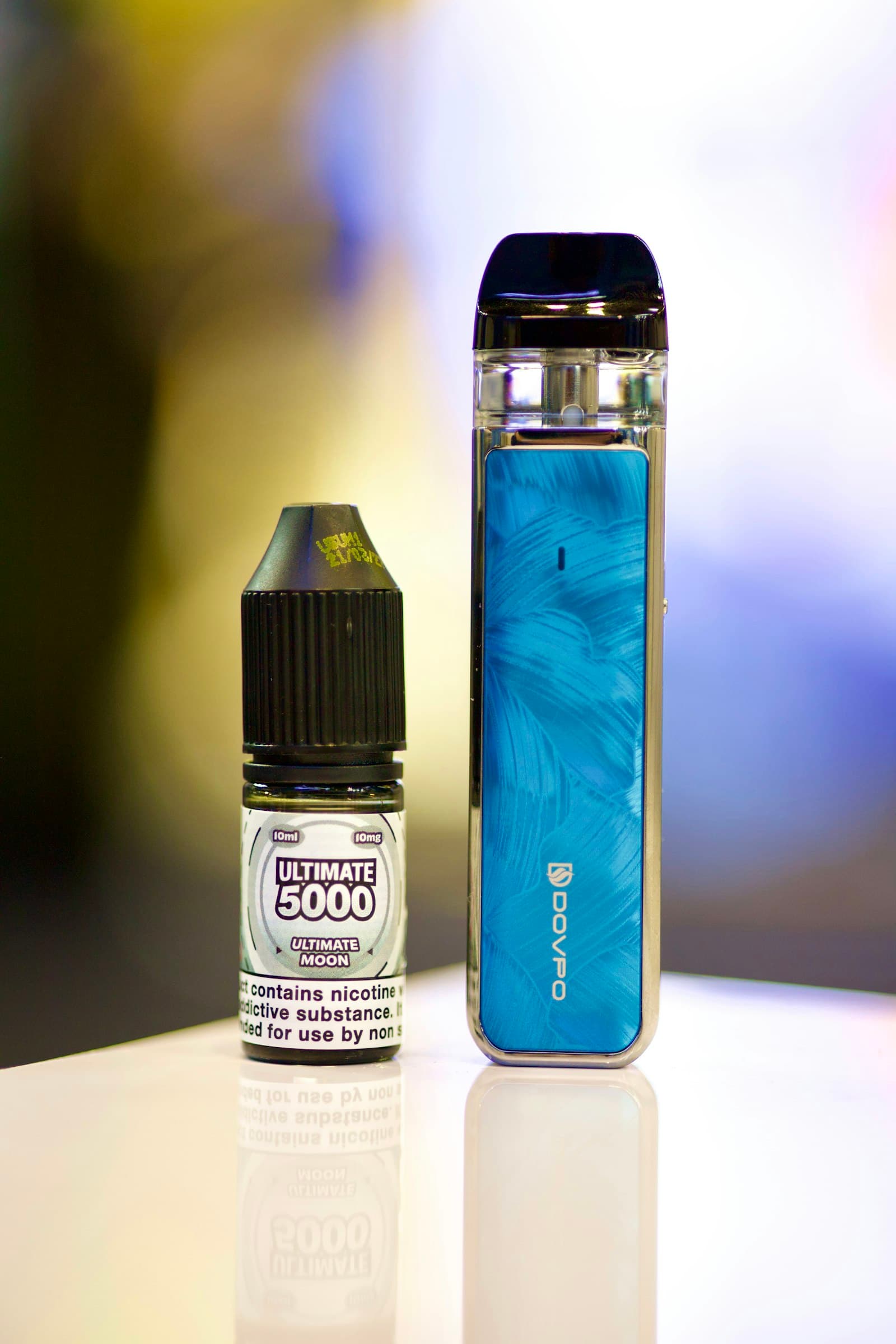
Nicotine strength is one of the most consequential numbers on an e-liquid label, yet it is often the one buyers spend the least time thinking about, especially when a pod system is their first vape kit. Nic salt e-liquids add a further layer of specific vocabulary on top of the usual device specs: 5mg, 10mg, 20mg, “nic salt” versus “freebase”, and PG/VG ratios. This guide covers what nicotine salt e-liquid actually is, how the three common UK strengths tend to map onto different usage patterns, and how strength choice pairs with your pod system’s capacity and coil resistance, finishing with a short checklist to help you settle on a sensible starting point.
What is nicotine salt e-liquid?
Nicotine salt (“nic salt”) e-liquid uses a different chemical form of nicotine to the “freebase” nicotine found in most standard e-liquids. Nic salts are generally described, as a widely stated formulation characteristic rather than a health claim, as giving a smoother throat hit at higher strengths than freebase e-liquid tends to at the same strength. That is one reason nic salts are commonly sold at higher strengths, up to the UK regulatory cap of 20mg/ml, whereas freebase e-liquids are more often found at lower strengths.
Most nic salt e-liquids sold in the UK use a standard 50/50 PG/VG ratio and come in 10ml bottles, which is also the maximum bottle size UK regulation allows for nicotine-containing e-liquid. That 50/50 ratio is part of why nic salts are typically paired with pod systems running higher-resistance, mouth-to-lung (MTL) coils, usually somewhere between roughly 0.6Ω and 1.2Ω, rather than the low-resistance, sub-ohm coils used in direct-to-lung tanks. A thinner, VG-heavy liquid designed for big vapour clouds is a different tool for a different job.
The three common UK strengths at a glance
UK-regulated nicotine e-liquid is capped at 20mg/ml, and most nic salt ranges are sold across three strengths beneath and at that cap: 5mg, 10mg and 20mg. None of these is inherently the “right” strength for any particular reader; nicotine needs vary from person to person, and the table below is a general indication rather than personal advice.
| Strength | Typical usage pattern | Often considered by |
|---|---|---|
| 5mg | Lighter or occasional use | Vapers who have already stepped down from a higher strength, or who find stronger nic salts too harsh on the throat |
| 10mg | A common mid-point for regular, moderate use | Many people switching from light-to-moderate smoking, or general everyday use |
| 20mg (UK cap) | More frequent use, or fewer, more concentrated puffs | Some heavier ex-smokers who want a stronger nicotine delivery per puff, at least initially |
These are broad tendencies rather than rules. Some people who smoked heavily settle comfortably on 10mg; some occasional vapers prefer 20mg because it lets them take fewer puffs to feel satisfied. The strength that works best for you depends on your own nicotine needs and how you like to vape, not just how much you previously smoked.
How strength pairs with pod capacity and coil resistance
Nicotine strength does not sit in isolation from the rest of your pod system’s spec sheet. UK regulation caps nicotine-containing pods at 2ml, so a stronger e-liquid delivers more nicotine within that same small volume, which is part of why nic salts at higher strengths are popular with compact pod kits rather than large sub-ohm tanks. Coil resistance matters too: the higher-resistance MTL coils typical of pod systems, covered in more detail in our single-coil vs dual-coil comparison, produce a tighter, cigarette-like draw that suits nic salts well, since you are drawing smaller volumes of vapour more often rather than large clouds in a handful of puffs.
In practice, this means the strength and the hardware tend to move together. Someone using a low-resistance, looser-draw setup and taking long, frequent pulls will generally get through nicotine faster at a given strength than someone taking short, tight MTL puffs on a higher-resistance coil, even at the same mg figure. If you are still assembling the rest of your kit’s spec sheet, coil resistance, pod capacity and battery size alongside nicotine strength, our checklist for choosing your first pod system walks through those points together.
Starting lower vs starting higher
It is generally easier to step up from a lower strength than to step down from one that feels uncomfortably strong. Many vapers who find 20mg harsh on the throat, or who simply want to use less nicotine over time, choose a lower strength such as 5mg as a starting point or as a later step-down — though, as above, nicotine needs vary person to person and there is no single correct starting figure. If you are new to nic salts and looking for a lower-strength option to try, Elux vape liquid 5mg is a widely stocked example of a 5mg nic salt line sold in the standard 10ml bottle size.
A worked example: Elux Legend Nic Salt
Elux’s Legend Nic Salt range is a useful illustration of how a mainstream UK nic salt line spans the strength bands above. It is sold in the standard 10ml bottle size, across 5mg, 10mg and 20mg strengths, formulated at the typical 50/50 PG/VG ratio used for nic salts aimed at pod systems. Pricing is generally in the region of £2.49 per 10ml bottle, though this is a typical figure rather than a fixed one and varies by retailer.
The flavour range is broad, spanning fruit profiles such as Apple Peach, Blueberry Raspberry and Blue Razz Cherry, ice and menthol options including Banana Ice, Cherry Ice, Strawberry Ice and Blackcurrant Menthol, and sour, sweet and lemonade styles such as Berry Lemonade and Pink Lemonade. The range runs to roughly 50 flavours at 10mg and 20mg strength, with a smaller selection of around 20 flavours specifically available at 5mg. Bottles are described as UK TPD/TRPR-compliant and are sold through UK distribution.
| Spec | Figure |
|---|---|
| Bottle size | 10ml |
| Nicotine strengths | 5mg, 10mg and 20mg (20mg is the UK regulatory cap) |
| VG/PG ratio | 50/50 (standard nic salt formulation) |
| Typical price | Around £2.49 per 10ml bottle (indicative, varies by retailer) |
| Flavour range | Roughly 50 flavours at 10mg/20mg; around 20 flavours at 5mg |
| Compliance | UK TPD/TRPR-compliant |
A decision checklist
- How much did you previously smoke, if at all? Heavier smokers more often start toward the middle or top of the range, though this is a starting point to adjust from, not a fixed rule.
- Are you new to nic salts, or already using them? If you already vape freebase e-liquid at a given strength, nic salts at the same mg figure can feel notably stronger, so it is worth starting a band lower and adjusting up if needed.
- Do you notice harshness at the back of the throat? If a strength feels uncomfortable rather than merely noticeable, a lower strength such as 5mg may suit you better — but nicotine needs vary person to person, so treat this as a starting point rather than a fixed answer.
- What is your pod system’s coil resistance? Higher-resistance MTL coils (roughly 0.6–1.2Ω) suit the tighter-draw, smaller-puff style nic salts are generally formulated for.
- Do you want to reduce your nicotine use over time? If so, it is worth picking a range, like the Elux Legend line above, that offers the same familiar flavours across multiple strengths, so stepping down does not also mean switching flavour.
Common mistakes
- Starting at 20mg without needing to. Going straight to the maximum strength can feel harsh on the throat; it is generally easier to step up from a lower strength than to step down from one that feels uncomfortable.
- Ignoring the coil and draw style. Using a nic salt e-liquid in hardware built for loose, direct-to-lung vaping (or vice versa) can make the same strength feel very different from how it is generally described.
- Assuming one strength suits everyone with a similar smoking history. Two people who smoked the same amount can still land on different comfortable strengths; treat any recommendation, including the bands above, as a starting point.
- Skipping the label. UK-compliant bottles clearly state strength, bottle size and the standard nicotine warning; unclear or missing labelling is a sign to buy elsewhere.
Putting it together
Nicotine strength is easiest to get right when you treat it as part of the same spec sheet as the rest of your pod system, rather than a separate decision. A 5mg, 10mg or 20mg nic salt e-liquid will behave differently depending on the coil resistance and draw style of the device it is used in, so it is worth settling on both together where possible. For the wider spec sheet, including battery size and pod capacity alongside nicotine strength, our checklist for choosing your first pod system covers the full picture in one place.